
The Las Vegas Convention Center (LVCC) is one of the largest and busiest exhibition complexes in the world, boasting over 2.5 million square feet of exhibit space. Stretching across four massive halls—Central, North, South, and the state-of-the-art West Hall—navigating this venue requires meticulous planning.
For exhibitors, Las Vegas is also known as a highly regulated trade union city. Understanding the local union jurisdictions and building codes is crucial to avoid costly on-site installation surcharges and delays. This guide breaks down the core logistical guidelines that every brand exhibiting at the LVCC must know.
1. Understanding Las Vegas Union Labor Rules
In Las Vegas, specific trade unions control almost all operations on the trade show floor. At the LVCC, the two primary unions you will interact with are:
- Teamsters Union (Local 631): Responsible for loading and unloading all freight, operating machinery, and moving displays to and from booths.
- Carpenters Union (Local 1977): Responsible for the unpacking, structural assembly, leveling, hanging of graphics, and dismantling of all custom and modular exhibit stands.
The “Hand-Tool” Rule: Exhibitors are allowed to set up their own displays only if the booth space is 100 square feet (10×10) or smaller, can be assembled in less than 30 minutes, and requires no tools (screws, drills, hex keys, etc.). If your booth is 10×20 or larger, or requires power tools for assembly, you must hire union carpenters.
2. Mitigating Drayage (Material Handling) Costs
Drayage is the fee charged by the show’s official General Contractor (such as Freeman or GES) to unload your freight from your shipping carrier at the loading dock, store it, transport it to your booth space, and return empty crates after the show. This is typically charged per 100 lbs (CWT) and can represent up to 30% of your total exhibition budget.
Here are three ways to dramatically reduce drayage fees at the LVCC:
- Use a Local Las Vegas Builder: Shipping crates cross-country is expensive. By partnering with a local builder with a Las Vegas-based factory, your booth is transported locally. We bundle shipments to take advantage of local consolidated freight, saving thousands.
- Design with Lightweight Materials: Because drayage is calculated purely by weight, modular aluminum frame tension-fabric booths cost a fraction to ship and handle compared to solid, heavy wooden millwork booths.
- Avoid Crate Surcharges: Shipments that arrive loose, uncrated, or damaged incur an automatic 30% handling surcharge from the general contractor. Ensure all items are securely palletized and shrink-wrapped.
3. Electrical & Rigging (Hanging Signs) Regulations
At the LVCC, electrical layouts must be submitted weeks in advance. Electricians union members (IBEW Local 357) handle all high-voltage power drops and distribution under the carpet. Exhibitors may plug in their own standard devices, but routing power lines under flooring must be done by union labor.
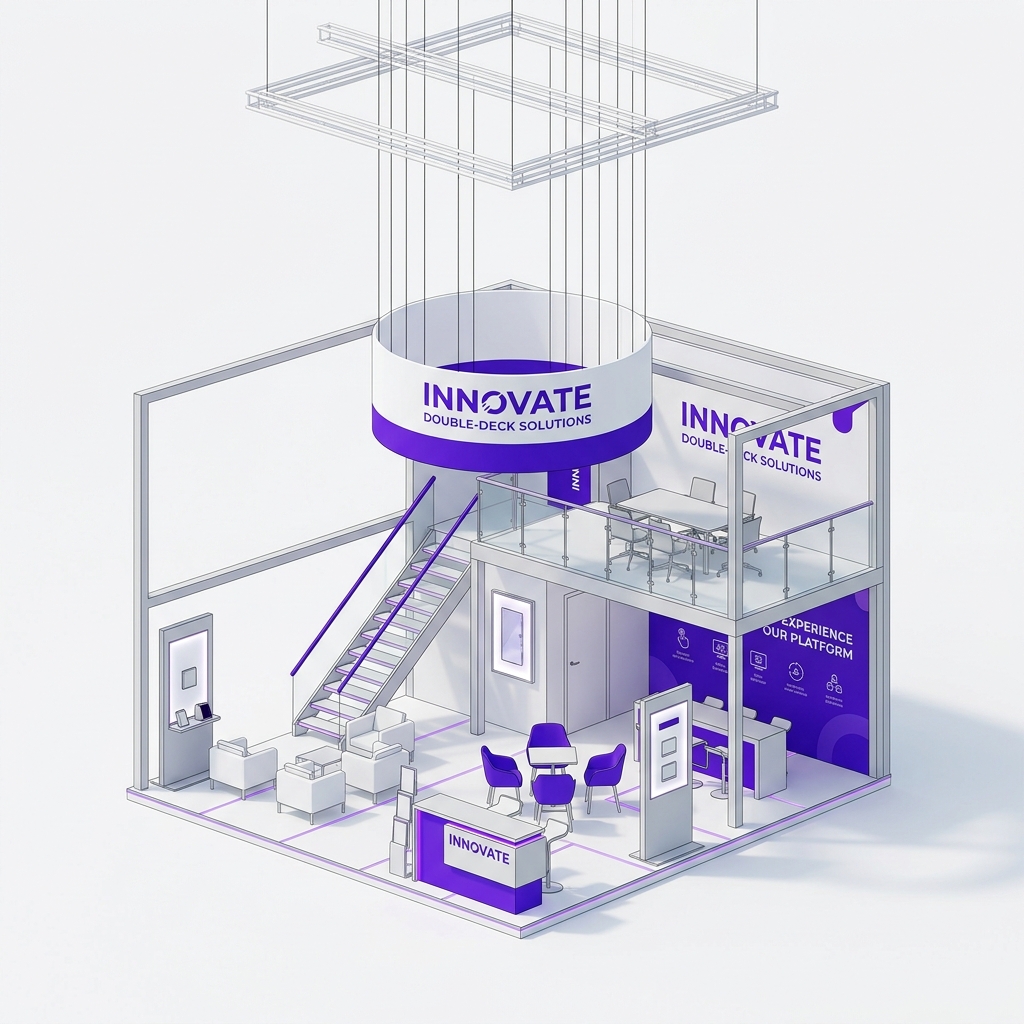
Hanging Signs: If your booth design includes a hanging banner sign or structural lighting truss above the booth, it must be rigged. At the LVCC, all overhead rigging is managed by the show’s official General Contractor. Rigging layout plans, weight load calculations, and structural blueprints must be submitted and approved prior to the event.
4. Hall Architecture & Logistics
The LVCC is divided into structurally distinct halls, which affects booth planning:
- West Hall: The newest hall features a state-of-the-art column-free design, massive 30-foot ceiling clearances, and floor-integrated utility ports. Ideal for large LED structural video wall builds.
- Central & North Halls: Older halls with architectural structural columns. If your booth footprint falls near a column, your custom booth design must incorporate or build around the column.
- South Hall: Two-floor layout. Lower level has dense low-clearance support columns, while the upper level has higher clearances. Moving freight to the upper level requires heavy elevator transport, which can slow down setup schedules.